The Unwritten Image
Nicolas de Oliveira
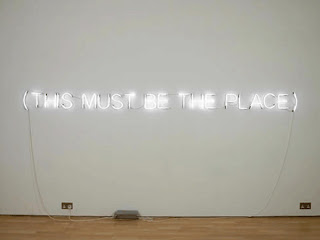
For the conceptual artist neon is a means of public writing; it displays the text for collective reading, unlike the text in a book, which is essentially for private consumption.
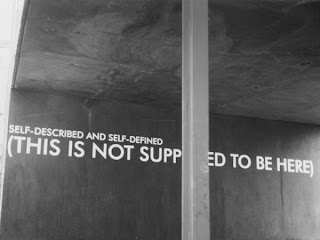
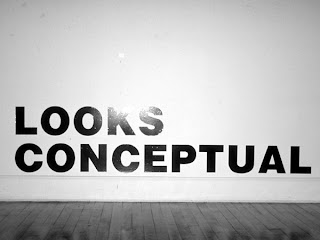
Stefan Bruggemann’s ongoing series of ‘Text Pieces’ shows an awareness of this dynamic. Moreover, the public display and nature of these works suggest a break with linguistic understanding, an argument that is underscored by Bruggemann’s ‘Obliteration Series’.
Through the employment of a form of public address, the statement is enhanced, and its weight is all the greater. We therefore assume the statement to be of a certain significance, an utterance beyond the ordinary. Additionally, the text is given a visual shape, a form that sets it out from the wall. Therefore, the statement tends towards the condition of a picture or object. Having been prised from the serried ranks of the text, the words turn into images. Furthermore, the words are illuminated, quite literally alight or burning, making a lasting (after) image on the spectator’s retina; we are usually warned not to look directly into light-sources as this places undue stress on the eyes. What shines brightly attracts us, but it also introduces the potential for momentary loss of sight or even permanent blindness. To see then, is to become temporarily blinded. We see nothing but the afterburn of the image, something that belongs in the past. And this image eclipses the present.


